Parenting today comes with new challenges — and new opportunities. One of the most meaningful? Teaching our children to love and care for the planet. From tiny hands learning to turn off the lights to preschoolers proudly carrying their own reusable snack bags, eco-friendly habits can take root early — and last a lifetime.
Why It Starts Early
Children learn by example. When they see us making small, thoughtful choices — recycling, reusing, choosing less plastic — they absorb those values long before they can explain them. In early childhood, repetition and routine are everything. The more we integrate mindful habits into daily life, the more natural sustainability becomes.
💛 Mom Tip: Narrate your actions. When you say things like, “We’re turning off the lights to save energy for the Earth,” you connect behavior to purpose.
1. Make Nature a Daily Classroom
Eco-awareness starts with connection. Kids protect what they love — so the more they experience the wonder of the natural world, the stronger their instinct to care for it.
- Go on short “micro-adventures” — a backyard bug hunt, leaf matching, or cloud-spotting walk.
- Keep a nature jar where kids collect interesting rocks, feathers, or petals.
- Rotate picture books that celebrate nature, like The Earth Book by Todd Parr or We Are Water Protectors by Carole Lindstrom.
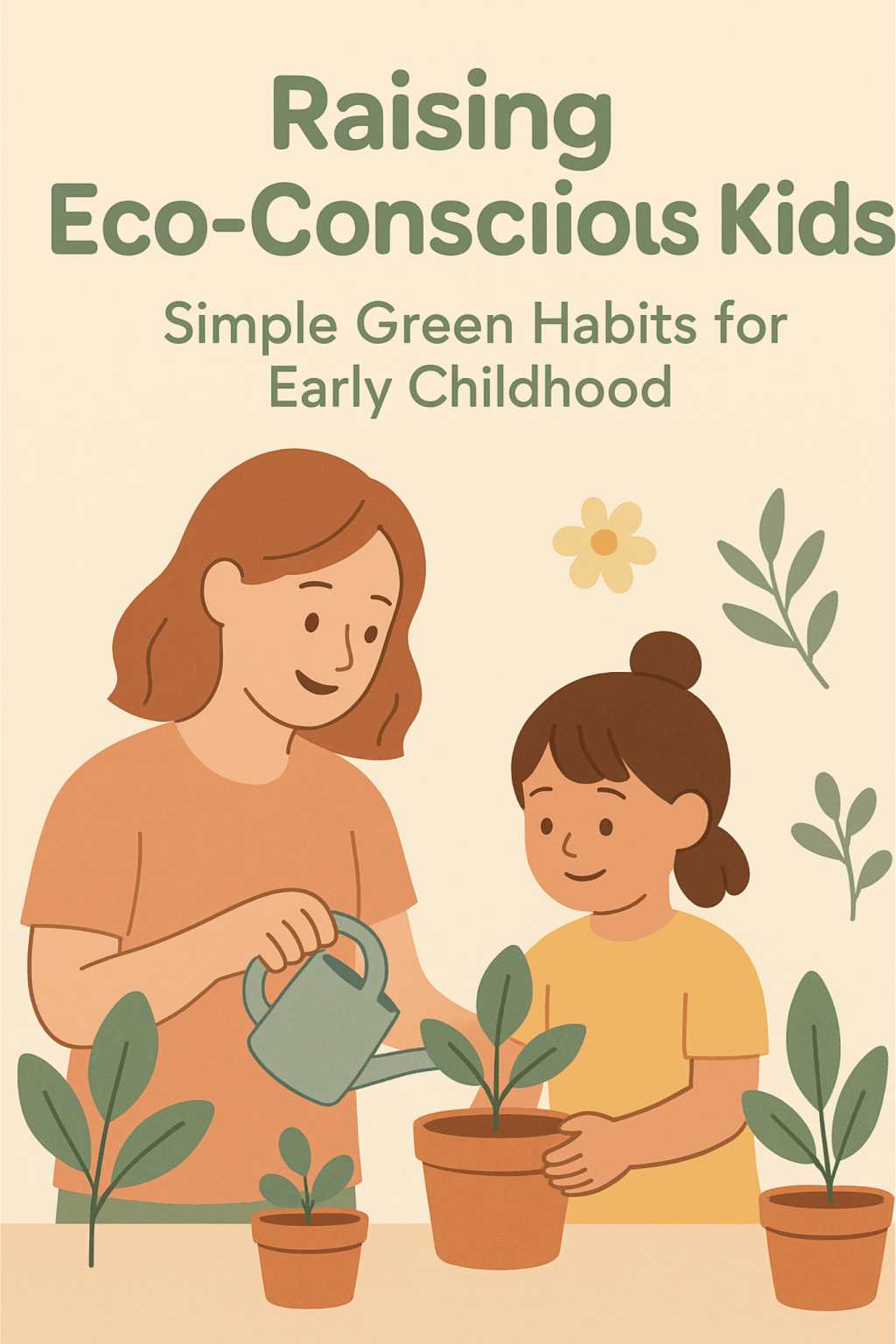
💛 Mom Tip: Create a “mini-garden” in a window box or recycled container. Let your child water and name the plants — instant ownership and pride!
2. Teach the 3 R’s (in Toddler Language)
Even the smallest children can grasp “reduce, reuse, recycle” if you make it visual and playful.
- Reduce: Encourage filling reusable water bottles and turning off the faucet while brushing teeth.
- Reuse: Turn paper scraps into art projects or repurpose old jars for craft storage.
- Recycle: Make a sorting game! Label bins with pictures so preschoolers can identify what goes where.
💛 Mom Tip: Turn recycling into a rhythm: “Paper, plastic, glass — into the bins it goes fast!” Singing it makes clean-up time fun and memorable.
3. Swap Plastic for Playful Alternatives
Plastic can be sneaky — it hides in snack bags, toys, and even clothing. But small swaps add up.
- Choose wooden or cloth toys instead of plastic.
- Pack lunches with reusable silicone bags and beeswax wraps.
- Bring your child along when shopping for eco swaps — let them choose their own color straw or lunchbox.
💛 Mom Tip: Talk about where things go when we throw them away. Kids are natural question-askers — harness that curiosity to spark lifelong awareness.
4. Storytime for Planet Earth
Books are powerful teachers. Choose stories that highlight kindness to nature and community responsibility.
A few favorites:
- Compost Stew by Mary McKenna Siddals
- 10 Things I Can Do to Help My World by Melanie Walsh
- Old Enough to Save the Planet by Loll Kirby
Read together, then act it out! After Compost Stew, build a simple compost bin with your child’s help.
💛 Mom Tip: Keep an “eco bookshelf” that grows with your child — swap board books for early readers as they age.
5. Lead by Example (Even When They Don’t Notice)
Children may not always comment when they see you refusing a plastic bag or biking instead of driving, but they’re watching — and learning. Every sustainable act models mindfulness.
- Involve them in errands like farmers markets and thrift store finds.
- Show them how repairing or reusing something saves both money and the planet.
- Celebrate progress, not perfection. Acknowledge your family’s small wins (“We used cloth napkins all week!”).
💛 Mom Tip: Make a “Green Jar.” Each time your family completes an eco-friendly act, drop in a bead or stone. When the jar fills, plan a nature outing to celebrate!
6. Keep It Positive
Avoid focusing on fear or guilt — young children thrive on empowerment. Frame eco-habits as choices that make us helpers.
Try phrases like:
- “We’re helpers for the Earth.”
- “The Earth feels happy when we pick up trash.”
- “Our choices matter!”
💛 Mom Tip: Keep the tone light. Curiosity and joy inspire more change than worry ever will.
Takeaway: Raising “Green Hearts,” Not Just Green Habits
Instilling eco-values in early childhood isn’t about perfection — it’s about connection. Every time you compost together, reuse a bottle, or marvel at a butterfly, you’re shaping a child who sees themselves as part of something bigger.
Those small, tender moments add up to something mighty: a generation of children who see the Earth not as a resource, but as a friend. 🌎💚
Created with love by ParentVillage.blog 💛

Leave a comment