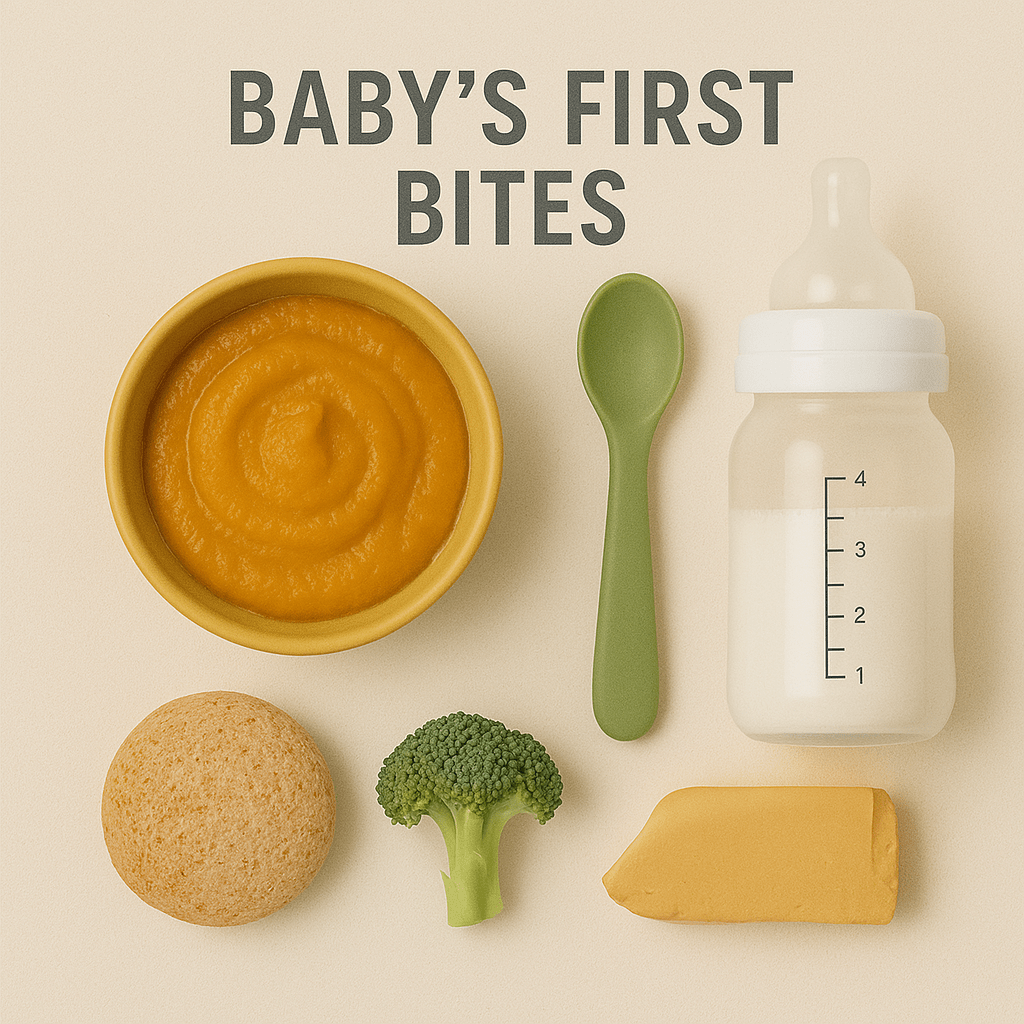
One of the most exciting (and messy!) milestones in your baby’s first year is starting solid foods. That first bite is about so much more than nutrition—it’s the start of a whole new adventure in textures, flavors, and independence.
If you’re wondering when and how to begin, don’t worry—you’re not alone. Let’s walk through the basics of introducing your little one to the world of first foods.
🍼 When to Introduce Solids
According to pediatricians and organizations like the American Academy of Pediatrics (AAP), most babies are ready for their first foods around 6 months of age. Every baby is different, but here are a few signs they might be ready:
✅ They can sit up with minimal support
✅ They have good head and neck control
✅ They show interest in food (watching you eat, reaching for food)
✅ They’ve lost the tongue-thrust reflex (no longer pushing food out automatically)
Before starting solids, always check in with your pediatrician to make sure your baby is developmentally ready.
🥣 What Foods Should You Start With?
First foods should be simple, soft, and easy to swallow. You can begin with single-ingredient, iron-rich foods. Here are some great starter options:
- Iron-fortified baby cereal (mixed with breastmilk or formula)
- Mashed avocado
- Pureed sweet potatoes
- Mashed bananas
- Steamed and pureed carrots or peas
- Pureed meat (like chicken or turkey for iron)
- Soft scrambled eggs (great source of protein and healthy fats)
👉 Pro Tip: Try to introduce one new food at a time and wait 2–3 days before trying another to monitor for any allergic reactions.
🍓 When to Offer Common Allergens
Believe it or not, early introduction of allergenic foods (like peanut, egg, or dairy) may help reduce the risk of developing allergies—especially if your child is at higher risk. Again, talk to your pediatrician first, but some allergenic foods can be introduced around 6 months in baby-safe forms.
Some allergenic foods to consider:
- Peanut butter powder or thinned peanut butter
- Eggs (fully cooked)
- Dairy (such as small amounts of yogurt or cheese)
- Fish and shellfish (if no family history of allergy)
🛒 Helpful Feeding Tools (Parent-Tested Favorites)
Here are some baby feeding products we love (affiliate links included!):
- 🥄 Soft-tipped baby spoons – gentle on gums and perfect for small mouths
- 🍽️ Suction plates and bowls – less mess, more mealtime fun
- 💦 Silicone bibs with food catchers – a total game changer
- 🪑 Adjustable high chair – grows with your child and keeps them supported
- 📖 First Foods Recipe Book for Babies – packed with easy purees and ideas
(Note: As an affiliate, we may earn a small commission at no cost to you if you buy through our links—thank you for supporting Parent Village!)
🧡 Take the Pressure Off
Starting solids is all about exploration—not perfection. Some babies love every bite, and others might spit out half their meal (or wear it proudly on their face). That’s okay. This stage is all about building healthy habits, developing motor skills, and having fun.
Remember: Breastmilk or formula is still the main source of nutrition until age one. Solids are just a supplement until your little one gradually transitions.
💬 We’re Here for You
Got a question about baby food? Need help planning a first foods schedule? Drop a comment or head to our Checklist Library for helpful feeding schedules, starter food lists, and more.
You’ve got this—and we’ve got your back. ❤️

Leave a comment